
Discover three simple stress relief techniques—meditation, exercise, and laughter—plus a practical checklist to reduce tension and manage everyday stress.
Stress is a natural part of life. Sometimes, it can even be useful. A manageable amount of stress may help you stay alert, meet an important deadline, prepare for a challenge, or find the motivation to finish a difficult project.
But stress can also become exhausting.
When worries keep running through your mind, your body feels tense, or you have trouble relaxing after a difficult day, finding healthy ways to cope becomes important. Although it is impossible to eliminate every source of stress, learning a few practical stress relief techniques can help you respond to everyday pressure more effectively.
Stress is the body’s natural response to challenges and changes. It can produce physical, emotional, and behavioral reactions, and it may be positive in some situations by helping you stay motivated and ready to respond.
The good news is that stress management does not always require complicated routines. Three accessible strategies—meditation, exercise, and laughter—can be incorporated into everyday life and may help you create moments of calm when you need them most.
If you want to develop healthier ways of responding to daily pressure, explore more Stress Management Strategies and start experimenting with the techniques that work best for you.
Why Stress Relief Techniques Matter
Stress cannot always be avoided. A difficult workday, family responsibilities, financial concerns, uncertainty, and unexpected events can all create pressure.
What you can influence is how you respond.
Healthy stress relief techniques give your mind and body an opportunity to move away from constant tension and toward relaxation. Different strategies work for different people, so the goal is not to discover one perfect method. Instead, it is to build a small collection of healthy habits you can use depending on the situation.
For example, you might meditate when your thoughts are racing, take a walk when your body feels restless, or spend time with someone who makes you laugh after a frustrating day.
Regular use of healthy coping strategies can make stress management part of your routine rather than something you think about only when you already feel overwhelmed. Cleveland Clinic recommends approaches such as physical activity and other daily stress-management habits rather than expecting stress to disappear completely.
Here are three techniques worth trying.
1. Meditation for Stress Relief
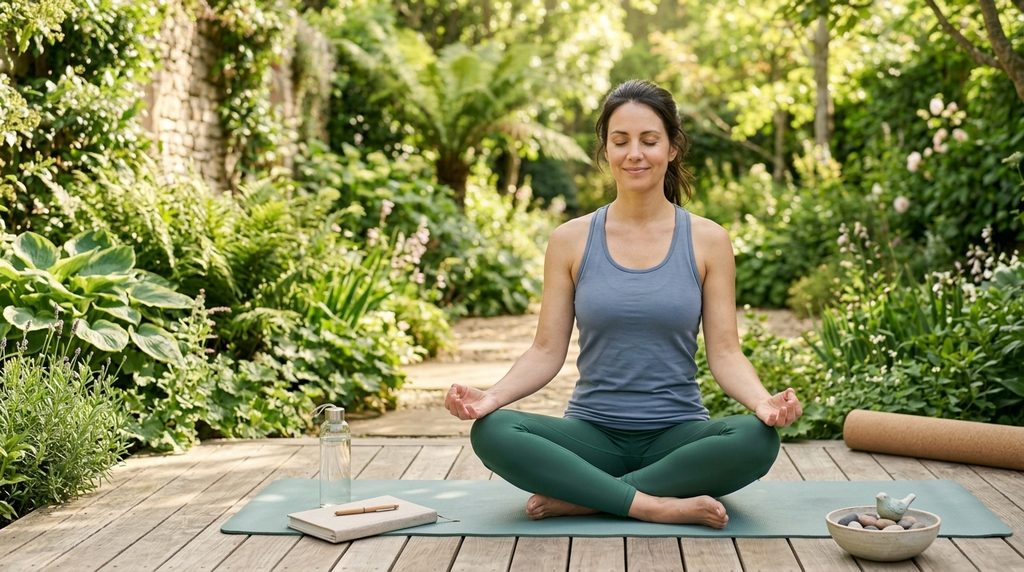
Meditation is one of the most familiar stress relief techniques, and for good reason: it encourages you to deliberately direct your attention away from the constant stream of worries, plans, memories, and distractions occupying your mind.
Meditation does not necessarily mean making your mind completely blank.
Instead, many meditation practices involve gently focusing on something specific, such as:
- Your breathing
- A calming word or phrase
- Physical sensations in your body
- A peaceful image
- Sounds around you
- The present moment
When distracting thoughts appear—and they almost certainly will—the goal is simply to notice them and return your attention to your chosen focus.
How Meditation Can Help With Stress
Stress often becomes more uncomfortable when the mind repeatedly returns to the same fears or concerns. Meditation can create a temporary break from that cycle by bringing your attention back to what is happening right now.
Johns Hopkins identifies meditation, yoga, gentle breathing, and progressive muscle relaxation among techniques that can activate the body’s relaxation response and help people feel calmer.
You do not need a special room, expensive equipment, or an hour of free time to begin.
A Simple 5-Minute Meditation for Stress Relief
Try this basic practice:
- Sit somewhere reasonably quiet and comfortable.
- Relax your shoulders and hands.
- Close your eyes if that feels comfortable.
- Breathe slowly and naturally.
- Pay attention to the sensation of each breath.
- When your thoughts wander, notice what happened without criticizing yourself.
- Gently return your attention to your breathing.
- Continue for approximately five minutes.
Johns Hopkins specifically suggests slow, gentle breathing for about five minutes as one simple relaxation exercise.
Do not worry about whether you are “good” at meditation. Wandering thoughts are normal. The practice is returning your attention again and again.
Make Meditation Easier to Maintain
Consistency is more useful than creating an overly ambitious routine that you abandon after a few days.
Consider linking meditation to something you already do. For example, meditate for five minutes after waking up, during your lunch break, or shortly before bed.
Over time, that small pause can become an important part of your personal stress-management routine.
2. Exercise to Reduce Stress
When you are already tired or stressed, exercise may be the last thing you feel like doing. Yet physical activity is another practical way to manage tension.
Exercise does not have to mean an exhausting gym session.
Walking, swimming, cycling, stretching, dancing, gardening, yoga, and recreational sports can all get your body moving.
Cleveland Clinic recommends physical activity as one way to respond when symptoms of stress begin and notes that even a short walk can help support mood.
Why Movement Can Feel So Good When You’re Stressed
Stress is not only mental. Many people notice it physically through tight shoulders, a clenched jaw, restlessness, headaches, or general muscle tension.
Movement gives you an opportunity to shift your attention from repetitive thoughts toward physical activity.
It can also create a useful separation between two stressful parts of your day. A walk after work, for example, can become a transition between professional responsibilities and personal time.
What Type of Exercise Is Best for Stress Relief?
The best activity is usually one you enjoy enough to repeat.
You could try:
- A brisk walk outdoors
- Swimming
- Cycling
- Yoga or gentle stretching
- Dancing to your favorite music
- Strength training
- Gardening
- Hiking
- Playing a recreational sport
You do not necessarily need an intense workout. If your day is already demanding, gentle movement may feel more appropriate.
Try Exercising in Water
If you enjoy being in the water, swimming or water-based exercise can be an appealing option.
Water exercise combines physical movement with an environment many people find relaxing. Rather than treating swimming as a uniquely superior solution for stress, consider it one of several enjoyable forms of exercise you can experiment with.
You could swim a few relaxed laps, join a water-aerobics class, or simply alternate comfortable movement with moments of rest.
The important point is to choose a form of physical activity that feels sustainable for you.
Turn Exercise Into a Stress-Relief Habit
You do not need to wait until you feel extremely stressed.
Try adding brief periods of movement throughout your day:
Take a short walk during lunch. Stretch after sitting for a long period. Walk while talking on the phone. Put on music and dance at home. Spend some time outside after work.
Small actions can make physical activity easier to maintain than relying entirely on occasional long workouts.
3. Laughter as a Natural Stress Relief Technique
The third of these stress relief techniques may be the most enjoyable: laughter.
Humor can momentarily interrupt a serious or stressful situation and give your mind something completely different to focus on.
You probably already know the feeling. You can spend hours worrying about a problem, then a friend says something unexpectedly funny and suddenly, even for a moment, everything feels lighter.
Cleveland Clinic includes laughter among practical strategies for relieving stress and notes that laughing can help people feel more relaxed and improve their mood.
You Don’t Have to Wait for Something Funny to Happen
Humor can be intentionally added to your day.
Try:
- Watching a favorite comedy
- Calling a friend who makes you laugh
- Sharing funny memories with family
- Playing a silly game with your children
- Looking at harmless funny videos or pictures
- Playing with a pet
- Allowing yourself to be playful rather than serious all the time
One of the easiest ways to create laughter is to introduce something unexpected into an ordinary situation.
Imagine playing soccer with your children and suddenly replacing the normal ball with an enormous exercise ball. Give the game a ridiculous name and play along with complete enthusiasm.
The activity itself may be simple. The unexpectedness is what creates the fun.
These moments can do more than distract you from a difficult day. They can also strengthen connections with the people around you.
How to Combine These Three Stress Relief Techniques
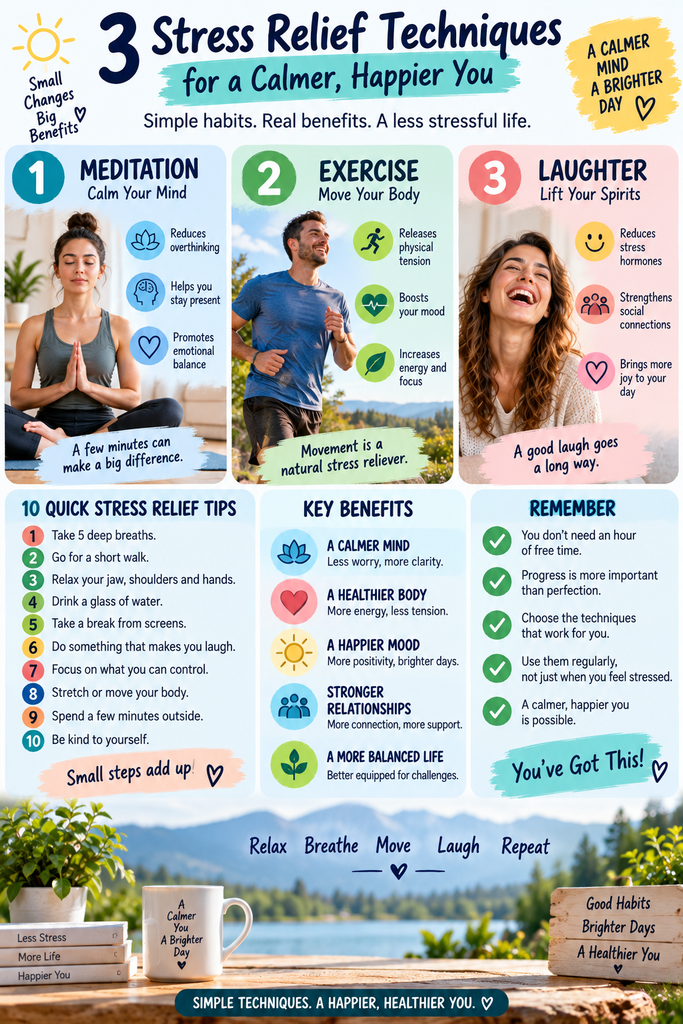
Meditation, exercise, and laughter do not have to compete with one another.
In fact, they can fit naturally into the same day.
For example, you might begin your morning with five minutes of mindful breathing, take a 20-minute walk after lunch, and finish the evening watching something funny with your family.
Another day might look completely different.
The objective is not perfection. It is creating several healthy options so that stress does not automatically lead to habits that leave you feeling worse.
A simple routine could look like this:
Morning: Five minutes of quiet breathing or meditation.
Afternoon: A short walk or stretch break.
Evening: Do something enjoyable that encourages laughter and social connection.
Experiment until you discover which combination fits your lifestyle.
What Is the Fastest Way to Relieve Stress?
When you need to calm down quickly, start with something simple.
Slow breathing is one of the easiest options because you can practice it almost anywhere. Find a comfortable position and focus entirely on breathing slowly for several minutes.
You could also:
- Walk outside for a few minutes
- Stretch your shoulders and neck
- Step away from your screen
- Listen to calming music
- Talk with someone you trust
- Watch something that makes you laugh
Johns Hopkins recommends gentle breathing and progressive muscle relaxation as straightforward techniques for encouraging relaxation.
The fastest method will vary from person to person, so experiment rather than assuming a single technique should work for everyone.
How to Make Stress Management Part of Everyday Life
Stress-management techniques are generally easier to use when they become habits.
Instead of waiting for an extremely stressful situation, practice when you are relatively calm.
You might schedule a short meditation every morning, walk at the same time each afternoon, or make Friday evening your family’s unofficial comedy night.
It can also help to identify what tends to trigger your stress.
Ask yourself:
When do I usually feel most stressed?
Is it first thing in the morning? During your commute? Before meetings? When checking email? Late at night?
Once you identify recurring situations, you can choose a stress-management strategy in advance.
For example, if commuting leaves you tense, listen to calming music or a relaxing podcast. If sitting at your desk creates physical tension, schedule movement breaks. If your mind races before bed, experiment with slow breathing or meditation.
The goal is to make stress relief proactive rather than purely reactive.
When Stress Relief Techniques May Not Be Enough
Meditation, exercise, laughter, relaxation exercises, and other healthy habits can be valuable tools, but they are not substitutes for professional care when stress becomes persistent or difficult to manage.
Consider speaking with a qualified healthcare or mental-health professional if stress is significantly interfering with your sleep, work, relationships, daily activities, or overall well-being.
Seeking support can give you additional strategies tailored to your circumstances.
Frequently Asked Questions About Stress Relief Techniques
What are three effective stress relief techniques?
Three accessible stress relief techniques are meditation, physical exercise, and laughter. Meditation can help focus your attention and encourage relaxation, exercise gives your body a healthy outlet for movement, and humor can provide an emotional break from stressful thoughts.
How can I reduce stress quickly?
Try several minutes of slow breathing, a short walk, gentle stretching, or another simple relaxation exercise. Johns Hopkins recommends gentle breathing and progressive muscle relaxation among practical techniques for encouraging a relaxation response.
How long should I meditate for stress relief?
You do not need to begin with long meditation sessions. Five minutes of focused breathing can be a practical starting point. Once the habit feels comfortable, you can gradually experiment with longer sessions if you find them useful.
Does exercise really help with stress?
Physical activity is commonly recommended as part of stress management. Cleveland Clinic specifically suggests getting some physical activity when stress symptoms appear and notes that even a short walk may help improve mood.
Can laughter reduce stress?
Laughter can be a useful addition to a stress-management routine. Activities that encourage humor may help you feel more relaxed and improve your mood, which is why laughter is included among practical stress-relief strategies recommended by Cleveland Clinic.
What is the best stress relief technique?
There is no single technique that works best for everyone. Some people respond well to quiet meditation, while others feel better after physical activity or social connection. Try several healthy techniques and pay attention to which ones leave you feeling calmer.
Final Thoughts: Find the Stress Relief Techniques That Work for You
Stress will probably never disappear completely—and that does not need to be the goal.
What matters is developing healthy ways to respond when pressure begins to build.
Meditation can give your mind a quiet place to settle. Exercise can help you move away from physical and mental tension. Laughter can remind you that even stressful days can contain moments of connection and enjoyment.
Start small.
Meditate for five minutes. Take a short walk. Call someone who makes you laugh.
Then repeat the habits that genuinely help.
Over time, these simple stress relief techniques can become part of a broader approach to managing everyday stress and protecting your well-being.
Explore more Stress Management Strategies to discover practical ways to create a calmer, healthier routine—and share this article with someone who could use a little less stress today.
Further reading: Johns Hopkins provides additional guidance on relaxation and stress-relief practices. Johns Hopkins Medicine: Stress Relief Techniques Cleveland Clinic also offers an overview of stress and everyday stress-management strategies. Cleveland Clinic: Stress Management