
Discover three practical ways to relieve stress: gentle breathing, manageable action, and enjoyable activities. Learn how to start and when to seek support.
Your shoulders are tight, your thoughts keep circling an unfinished task, and even a small request feels like one demand too many. You want relief, but a complicated wellness routine is the last thing you need.
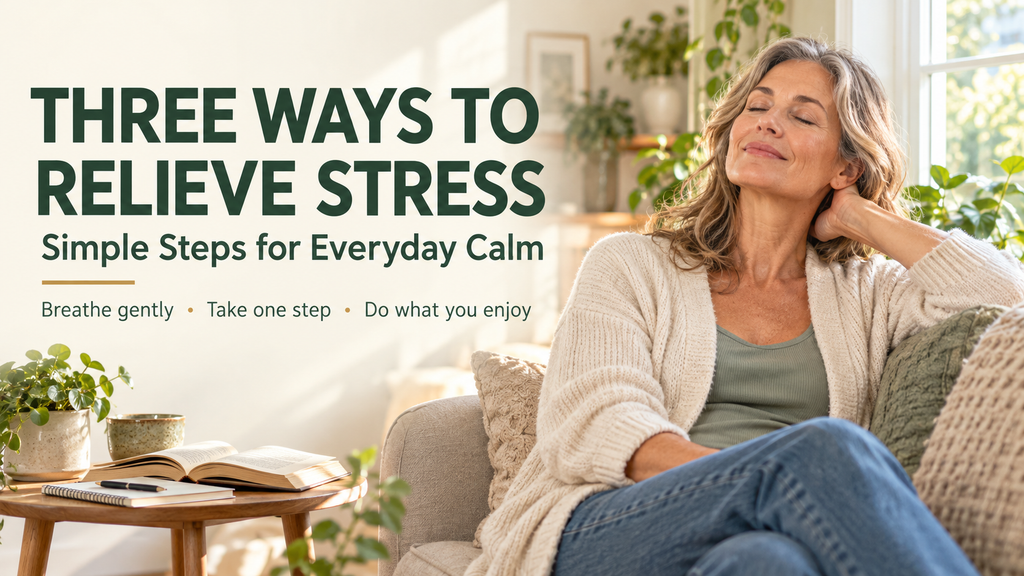
There are practical ways to relieve stress that you can begin without special equipment or meditation experience. Three useful starting points are breathing gently, taking one manageable action, and making time for something you enjoy.
These approaches serve different purposes. One creates a pause, another addresses a practical pressure, and the third makes room for recovery. None guarantees instant calm, and some stressors require support or changes beyond your individual control.
You do not have to fix your entire life before taking one helpful step. Start with the approach that fits what is happening right now.
Why Simple Ways to Relieve Stress Can Be Useful
Stress is a natural response to challenging situations. It can affect concentration, sleep, mood, and physical comfort. People respond differently, so an approach that helps someone else may need adjusting for you. who.int
For everyday use, consider this practical question: “What would make the next part of my day more manageable?”
Perhaps you need a moment before replying to an email. Perhaps an appointment needs booking. Perhaps you have spent the whole day meeting other people’s needs and need a little time for yourself.
The aim is not to become perfectly relaxed. It is to choose a response that supports you rather than adding another demand.
1. Use Gentle Breathing to Create a Pause
A breathing exercise can be a simple place to start when you notice tension. You do not need to empty your mind or achieve a particular feeling.
The NHS recommends comfortable, unforced breathing and regular practice. Its exercise involves breathing gently through the nose and out through the mouth, optionally counting steadily during each phase. NHS
Try This Comfortable Breathing Exercise
- Sit in a supported position with your feet on the floor.
- Let your shoulders settle and loosen clothing that restricts breathing.
- Breathe in gently through your nose, as comfortably as you can.
- Let the breath flow out gently through your mouth.
- If helpful, count from one to five in and out, without forcing the count.
The NHS suggests continuing for at least five minutes. If you only have a moment, use it as a brief pause; do not treat one minute as a guaranteed remedy. NHS
Avoid trying to take the largest possible breaths. If you feel dizzy or uncomfortable, stop the exercise and return to your normal breathing.
A Real-Life Example
Imagine you receive a message that irritates you. Instead of composing an immediate reply, put the phone down and take a breathing break.
Afterward, reread the message and decide what to do. You might reply, ask a question, or leave the conversation until you have more time.
The message may still be frustrating. The useful outcome is having given yourself space to choose your response.
If Focusing on Your Breath Does Not Suit You
You do not have to persist with an uncomfortable exercise. You might prefer noticing your feet against the floor or looking around and naming a few objects you can see.
The World Health Organization’s guide, Doing What Matters in Times of Stress, offers practical coping skills that can be practiced for a few minutes each day. Exploring different exercises can help you find a suitable starting point. who.int
2. Identify One Stressor and Take a Manageable Step
Sometimes an unfinished task needs attention. Thinking repeatedly about it does not necessarily clarify what to do.
The NHS recommends breaking problems down, considering possible solutions, and making a specific plan. It also distinguishes problems you can act on from worries about things outside your control. NHS
Turn a Vague Concern Into a Specific Task
Ask yourself:
- What exactly is bothering me?
- Is there something practical I can influence?
- What is the smallest useful next step?
- When will I take it?
You do not need to make a major decision immediately. Gathering information, asking for help, or scheduling a conversation can be a reasonable first step.
Here are illustrative examples:
| What is on your mind | One possible next step |
|---|---|
| “I have too much work.” | Ask which of two competing tasks has priority. |
| “I keep avoiding that appointment.” | Find the contact details and choose a time to call. |
| “I cannot face my finances.” | List this week’s essential payments. |
| “That conversation feels difficult.” | Write down the main point you want to communicate. |
These are options to adapt, not a checklist you must complete.
Write a Plan You Could Actually Follow
Compare “Get organized” with “Tomorrow at ten, spend five minutes sorting the appointment letters.”
The second version tells you where to begin. If it still feels too large, reduce it again: find the letters and put them in one place.
Your plan should fit your actual energy and circumstances. A small completed action is more useful than an impressive plan you cannot realistically attempt.
What About Problems You Cannot Solve Today?
Some pressures involve grief, illness, financial hardship, or another person’s decisions. They cannot be removed simply by being more decisive.
For recurring worries, the NHS suggests writing them down and setting aside a short period to consider them. If action is possible later, schedule it; if it is not, acknowledge the uncertainty and practice returning attention to the present. NHS
You might write: “I am waiting for an answer. I will follow up on Thursday. For now, I will prepare dinner.”
The uncertainty remains. The plan simply gives it a boundary.
3. Make Time for an Activity You Enjoy
Enjoyment deserves a place in your week before every responsibility has been completed.
The National Institute of Mental Health recommends scheduling relaxing and enjoyable activities, including music, reading, nature, and low-stress hobbies. Self-care is individual, so finding what helps may involve trial and error. National Institute of Mental Health (NIMH)
You do not need to become completely absorbed or stop having stressful thoughts. An activity can still be worthwhile when your attention wanders.
Choose Something That Fits Your Day
Consider a few options:
- Read a chapter or a few pages.
- Listen to a favorite song without checking messages.
- Take a comfortable walk.
- Cook something simple.
- Spend time with a pet.
- Draw, garden, play a game, or talk with someone you enjoy.
Choose something accessible rather than something you think you ought to enjoy. If competitive games leave you frustrated, try a quieter activity. If sitting still feels unappealing, choose gentle movement.
Give the Activity a Small, Specific Place
For example, you might decide to read for ten minutes after lunch or listen to music while preparing an evening meal.
Treat those times as practical experiments, not medical prescriptions. Afterward, ask: “Did I enjoy that? Would I choose it again?”
You do not need to turn relaxation into another performance target. Your hobby does not need an audience, a progress chart, or a business plan.
Keep Enjoyment Alongside Necessary Action
A break can coexist with dealing with a difficult task. You might make one appointment call, then take a walk.
If you repeatedly use an activity to postpone an important responsibility, return to the second strategy and choose a manageable step. Both recovery and practical support can have a place.
How to Choose Between These Ways to Relieve Stress
Use the following as a guide rather than a strict rule:
| What you notice | A possible starting point |
|---|---|
| You want a pause before responding. | Try comfortable breathing. |
| A specific unfinished task is bothering you. | Write one next step. |
| Your day has left little room for enjoyment. | Choose a short, pleasant activity. |
| The pressure exceeds what you can manage alone. | Ask for practical or professional support. |
You can combine the approaches: pause, identify a task, and make space for something restorative. You can also use just one.
Build a Routine Without Making It Another Burden
The WHO recommends everyday foundations such as regular routines, sleep, movement, balanced meals, and connection with other people. These support coping, even though they cannot eliminate every source of stress. who.int
Start by attaching one small practice to something you already do. For example:
- After sitting down at your desk, pause before opening messages.
- Before finishing work, write tomorrow’s first task.
- After dinner, make time for an activity you enjoy.
Pick one anchor initially. If you miss it, begin again when you remember. There is no need to “catch up” on relaxation.
For more articles, explore our Stress Management Strategies.
When Stress Deserves Professional Support
Seek support when stress is difficult to cope with, self-help is not helping, or symptoms interfere with your daily life. You do not need to wait until you are unable to function. nhs.uk
NIMH recommends professional help for severe or distressing symptoms lasting two weeks or more, including sleep difficulties, loss of interest, concentration problems, or difficulty completing usual tasks. Severe symptoms warrant help sooner. National Institute of Mental Health (NIMH)
A primary care provider or mental health professional can help assess what is happening and discuss appropriate options. Do not assume every new physical symptom is caused by stress.
Frequently Asked Questions About Ways to Relieve Stress
What Can I Do When I Feel Stressed Right Now?
Pause, try comfortable breathing if it suits you, and identify what you need next. That might be one practical action, a break, or support from someone else.
Do I Have to Meditate to Manage Stress?
No. Meditation is one option. Breathing exercises, problem-solving, enjoyable activities, and social support offer other starting points.
How Long Should a Breathing Exercise Last?
The NHS exercise recommends at least five minutes and regular practice. Comfort matters more than forcing a particular breath depth or count. NHS
Can Hobbies Help Even If I Still Feel Worried?
You can enjoy an activity while worries remain. Do not judge the experience solely by whether every stressful thought disappears.
What If None of These Techniques Helps?
Consider whether you need a different approach, practical assistance, or professional support. Struggling with a technique does not mean you have failed.
Start With One Helpful Step
These three ways to relieve stress offer manageable starting points: breathe gently, take a useful action, and make time for enjoyment.
You may not control every demand, deadline, or uncertainty. You can still make room for a response that supports your needs.
Which step fits your day: a breathing pause, one practical action, or an enjoyable activity? Choose one to try, and share this article with someone who could use a gentler starting point.
